
Introduction to Scuba Diving
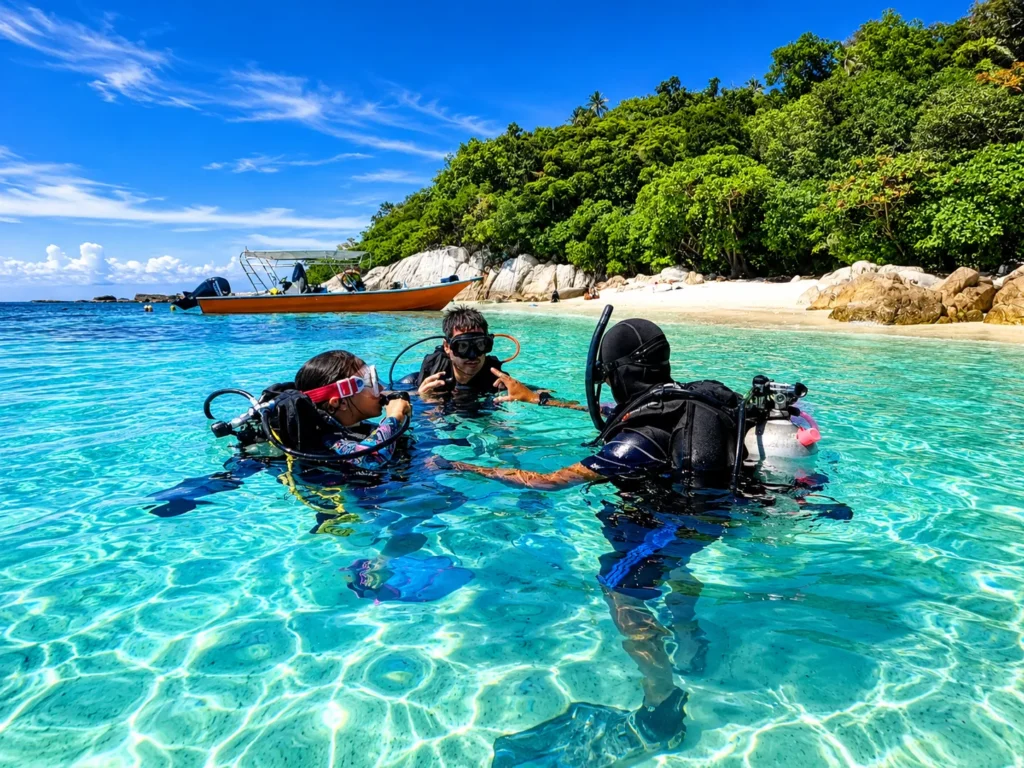
Scuba diving is one of the most exciting activities to experience at Pulau Perhentian. Imagine entering crystal-clear turquoise waters, discovering colourful coral reefs, observing tropical fish and exploring fascinating underwater landscapes. The experience offers a wonderful opportunity to appreciate the island’s marine biodiversity beyond its beautiful beaches.
Pulau Perhentian is known for its coral reefs, underwater rock formations, shipwrecks and diverse marine life. Scuba diving activities are available through dive centres around Long Beach and Coral Bay on Pulau Perhentian Kecil, as well as selected locations on Pulau Perhentian Besar.
For beginners, introductory scuba diving programmes provide an opportunity to experience breathing underwater under the supervision of a qualified diving professional. These programmes introduce basic scuba equipment, underwater communication and essential diving skills. However, an introductory experience is not equivalent to completing a scuba certification course.
Certified divers can participate in guided dives at suitable locations according to their qualifications, experience and current diving abilities. The dive centre will recommend appropriate sites based on water visibility, current strength, depth and prevailing sea conditions.
Diving Preparation and Equipment
Before the diving session begins, participants receive a safety briefing and instructions on using scuba equipment. Essential equipment includes a diving mask, regulator, buoyancy control device, air cylinder and other appropriate gear.
Beginners are introduced to basic skills such as breathing through a regulator, equalising ear pressure, communicating through underwater hand signals and following an instructor’s directions. These skills help participants become more comfortable and confident during the experience.
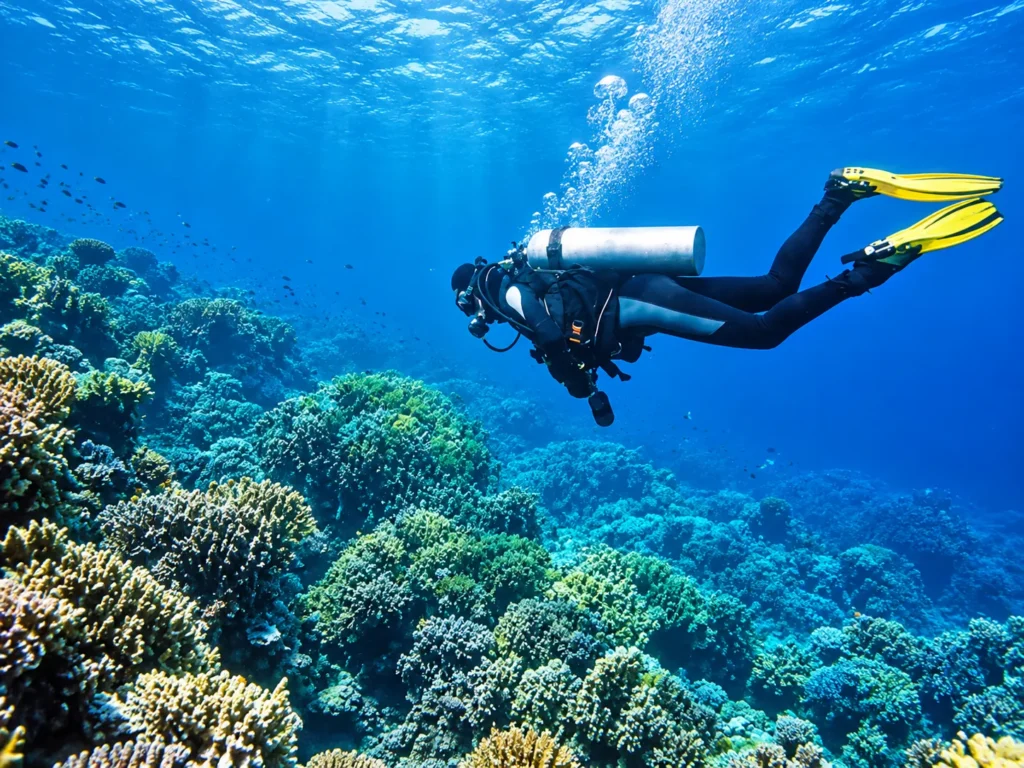
Equipment checks are an essential part of preparation. The mask, regulator, air supply and buoyancy control device should be checked with a buddy or instructor before entering the water. Certified divers should also review the dive plan, maximum depth, expected duration and emergency procedures.
Proper preparation helps ensure that the diving session is organised, enjoyable and conducted with appropriate safety precautions.
Scuba Diving Schedule at Pulau Perhentian
Scuba diving sessions are available throughout the day, allowing visitors to choose a suitable time for their underwater adventure.
Daily Diving Schedules
- Morning Dive: 8:30 AM
- Late Morning Dive: 11:00 AM
- Afternoon Dive: 2:30 PM
Night Diving
For a more unique underwater experience, night diving can be requested at 7:30 PM. This activity is available by advance request and requires a minimum of 2 divers per reservation.
Night diving offers a different perspective of the underwater environment, as marine life and underwater surroundings can appear different after sunset. Participation depends on suitable conditions, operator availability and the diver’s qualifications and experience.
Important Booking Information
Visitors are encouraged to book in advance to secure their preferred diving schedule. Night dives must be requested in advance, with at least two divers required per reservation. All diving activities are subject to weather conditions, sea conditions and the dive centre’s safety assessment.
Diving Safety Guidelines
Booking a Suitable Diving Experience
Selecting a reputable dive centre is an important first step. Beginners should choose an introductory programme that provides appropriate professional supervision, while certified divers should select dives that match their training and experience.
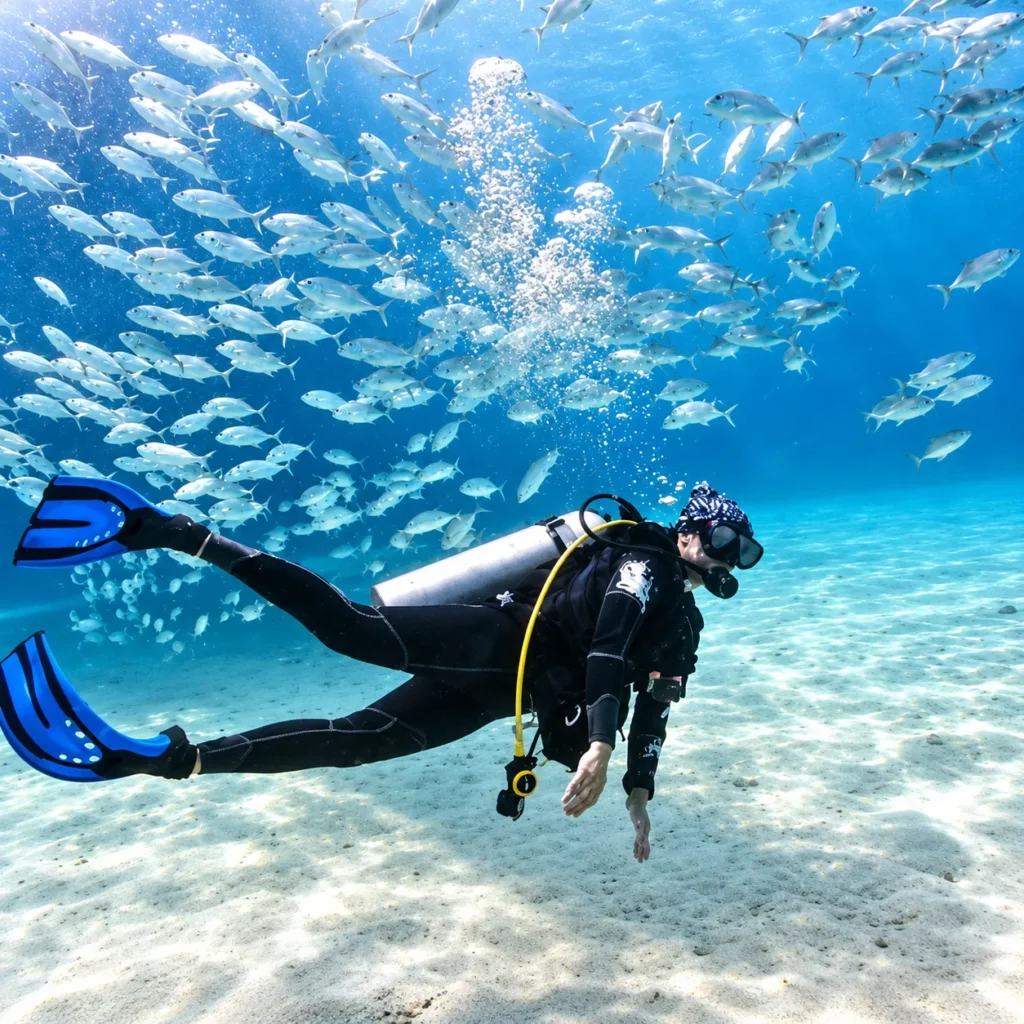
Participants should disclose relevant medical or fitness concerns and complete any required health screening. If a medical assessment is necessary, advice should be obtained from a suitably qualified healthcare professional before diving.
Equipment Checks and Safety Briefings
Before entering the water, all participants should listen carefully to the safety briefing and complete an equipment check with their assigned buddy or instructor.
The briefing should cover the planned route, depth limits, expected dive duration, underwater communication signals and emergency procedures. Following the agreed dive plan and remaining within personal limits are essential principles of responsible scuba diving.
Underwater Safety
Once underwater, divers must breathe continuously and never hold their breath while ascending or descending with scuba equipment. Ear pressure should be equalised regularly during descent, and the air supply should be monitored throughout the dive.
Maintaining neutral buoyancy is particularly important when exploring coral reefs. Divers should avoid touching or standing on coral, disturbing marine animals or entering wrecks and confined spaces without appropriate training.
Participants must remain with their assigned buddy or guide and follow professional instructions throughout the session. If discomfort, difficulty equalising or equipment problems occur, the appropriate response is to communicate immediately and follow established safety procedures.
Weather and Diving Conditions
Sea conditions can change, affecting underwater visibility, current strength and overall diving safety. Before departure, the dive centre assesses whether the planned location is suitable.
Depending on the conditions, the operator may select an alternative site, postpone the session or cancel the activity. Following these decisions is essential, as safe diving depends on suitable environmental conditions as well as proper preparation and equipment.
After Diving
After completing a scuba diving session, participants should follow the dive centre’s recommendations and consult their dive computer for guidance on the interval required before flying.
Common minimum recommendations for recreational divers are at least 12 hours after a single no-decompression dive and at least 18 hours after multiple dives or multiple days of diving. Longer intervals may be necessary after dives requiring decompression stops or in other circumstances. These minimum recommendations do not guarantee that flying is risk-free.
Following appropriate post-dive guidance is particularly important for visitors planning to travel by aeroplane after their holiday at Pulau Perhentian.
Environmental Responsibility
The underwater environment surrounding Pulau Perhentian is one of the island’s most valuable natural attractions. Its coral reefs and marine habitats support a variety of sea creatures and contribute to the island’s ecological importance.
Responsible diving practices help protect this environment. Divers should maintain good buoyancy, avoid touching coral, refrain from collecting marine organisms and observe wildlife without disturbing it.
All rubbish should be brought back to shore and disposed of properly. Participants should also follow local conservation guidelines and respect restrictions established by dive operators and relevant authorities.
Protecting marine life ensures that Pulau Perhentian remains an attractive destination for future visitors while supporting the long-term conservation of its underwater ecosystems.
Conclusion
Scuba diving at Pulau Perhentian provides an opportunity to discover the island’s underwater landscapes, coral reefs and diverse marine life. Introductory programmes allow beginners to experience scuba diving under professional supervision, while certified divers can explore suitable sites according to their qualifications and experience. Proper preparation, equipment checks, careful dive planning and compliance with professional instructions are essential for a safe and enjoyable activity. By practising responsible diving and respecting the marine environment, visitors can appreciate the underwater beauty of Pulau Perhentian while contributing to the conservation of its natural heritage.